

Wicker - 105 Minutes - Rated R
3.5/5 ★
Wicker showcases an unconventional romantic relationship while being sincere and heartfelt with its protagonists. The cinematography, world-building, incredible practical effects, remarkable sound design, as well as a specific subdued but impressive acting performance, make Wicker an overall enjoyable story. Despite this, much of the dialogue, pacing, and plot points hold this film back from exploring the most interesting aspects, being the dynamic and relationship between the fisherwoman and her wicker-husband.
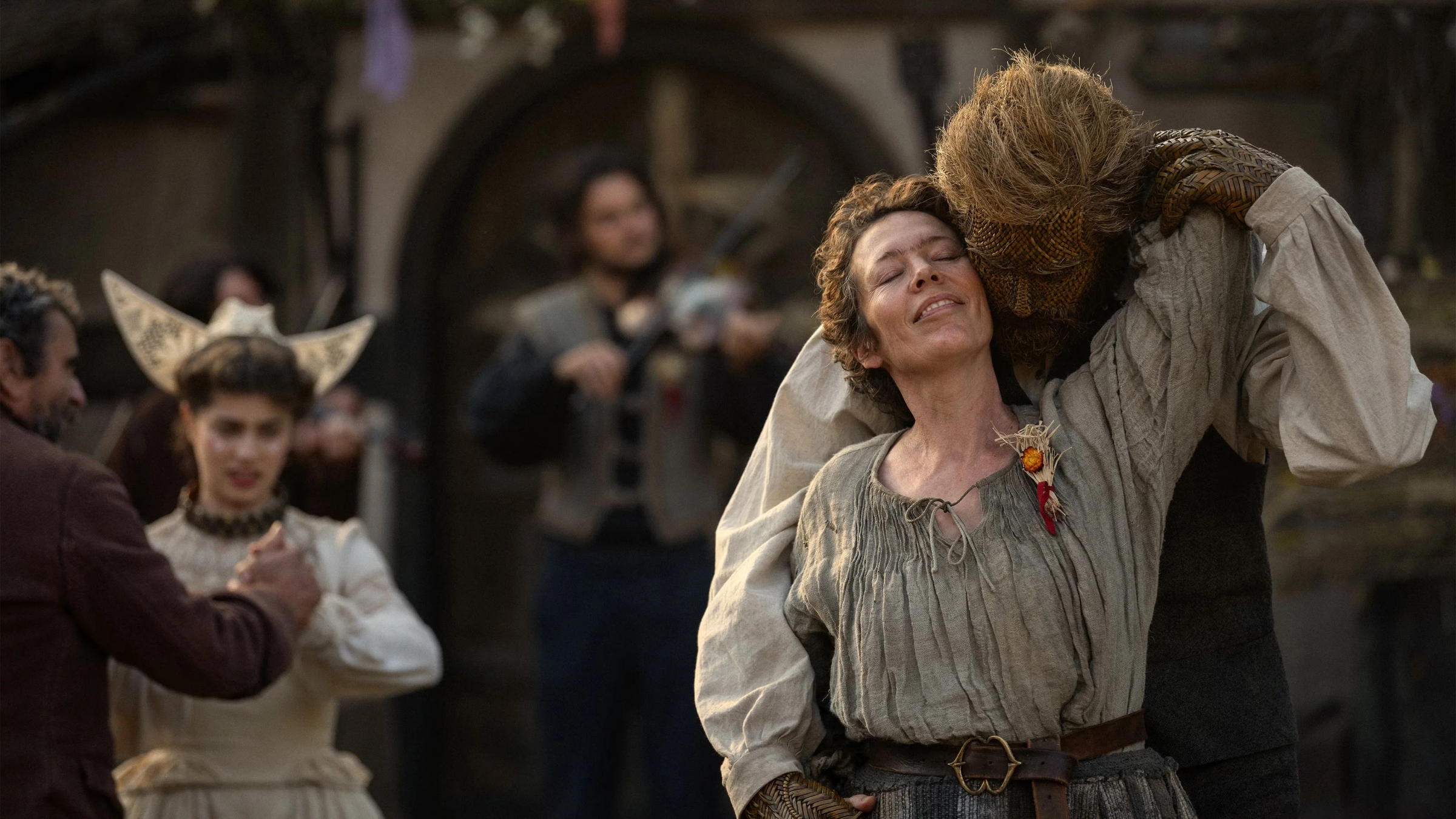
The concept of an unconventional love story is a tale as old as fiction itself; taking a human, normally lacking the affection normalized by marriage in society, falling in love with someone, an outcast under much scrutiny due to their personality, origin, and appearance. Wicker understands this trope and is willing to invert it in a unique way. Seemingly taking place in the Middle Ages, the central theme tackled is the stereotypes of marriage. In this case, marriage is shown to be transactional rather than harmonious, with every person being referred to by their spouse’s trade (i.e. Tailor’s wife). In opposition to this, the protagonist, simply named Fisherwoman (Olivia Colman) is shown in the beginning to not only be averse to the purpose of marriage, but also seeks a true partner rather than someone to purely aid her business. This is the catalyst to the main plot, in which the Fisherwoman requests that the Basket Weaver (Peter Dinklage) creates her a Wicker Husband (Alexander Skarsgård). This unorthodox union creates the central conflict, in which the townspeople, especially the Tailor’s Wife (Elizabeth Debicki) witness the beauty in this relationship, revealing to themselves the many flaws of their own marriages. The result of the ruptures in each relationship lead to both disruption amongst the villagers, as well as moments of disarray between the protagonists, despite this disarray being entirely disproportionate.
As for the highlights, Wicker’s cinematography meets the expectations from a story of Medieval fantasy. The set design, utilizing the vibrance of nature in a seaside wilderness, as well as rustic architecture customary to pre-industrial environments, impressively breathes life into this world. The camerawork is exceptional, feeling as if we ourselves are setting foot in the village or by the water. Even the costume design is executed very well, not only fitting the period, but also willingly softening its exuberance to enliven its surroundings. The world-building is remarkable, giving each character a role integral to the innerworkings of a compact society. From the environments, to the costumes and the props, the community feels incredibly realistic, allowing for the story to familiarize us with the turbulent personalities of its inhabitants.
Despite the exceptionalism in the technical aspects of the film, the standout component of Wicker is by far the Wicker Husband as a character. Firstly, calling his external anatomy intricate would be an unsurpassed understatement. Every little crevice between the fibers of his body is detailed to perfection, thanks to it being an almost entirely practical creation. It truly feels as if a vessel made of wicker came to life. This is only enhanced by both the sound design, as well as Alexander Skarsgård’s performance. Every movement of the Wicker Husband is felt through the bending of each joint, and the motions of speech and labor. The flexing of muscles, or even the movements of his “bones” are exhibited through sensationally relaxing audio. As for the acting performance, Skarsgård embodies the Wicker Husband. Every moment of speech is delivered with a level of tranquility akin to a cliché elderly wiseman. The long-windedness in his voice, as well as the consciousness in Skarsgård’s movements and mannerisms, achieve a new level of humanity and personality in the Wicker Husband’s hollowness. However, this performance does not completely upstage the other portrayals, as the entire cast elevates each other through their individual peculiarities.
Despite these one-of-a-kind filmmaking techniques, Wicker is hampered in its success by the overwhelming attention to unnecessary characters and plot points. Although a central theme of the narrative is the façade of marriage and the inharmonious nature of the village’s relationships, its approach to this theme actively regresses due to overburdening attempts of vulgar comedy. This is not to say the film is not funny at times, instead it is to say the reliance on humor in many cases is an annoyance and feels unnatural. The world-building clarifies the disharmony of the relationships, romantic or otherwise, to limited success on account of the blatancy of numerous attempts at crude and raunchy jokes that do very little to progress the plot. The only moments of humor that feel genuine are present in the dynamic between the Fisherwoman and her Wicker Husband, as they attempt to navigate the oddity that is their relationship. There is also excessive priority of the plot towards the villagers themselves. Many of their motivations are understandable, considering their lack of sympathy and circumstances; their execution of their frustration is displayed ad nauseam, attempting to delve deep into their personalities, without doing the heavy lifting of progressing their characters throughout the story. Overall, it is the elements of the plot surrounding the central dynamic that are encumbering this story from focusing primarily on the love between a Wicker man and his wife.
Overall, Wicker is in some cases funny, and in many cases incredibly charming. It cannot be emphasized enough how compelling the relationship between the Wicker Husband and the Fisherwoman is throughout the story. The Wicker man’s willingness to love his wife unconditionally, to the point that he risks his own wellbeing, as well as the sincerity between both characters, allow for their love to be showcased in remarkable fashion. Despite this being the most powerful feature, enhancing all the technical and creative aspects, the fascination is diminished by the immoderation of necessary characters, as well as the lackluster and disproportion between childish and heartfelt dialogue.


 Printer-friendly version